Everyone tells you the problem is discipline. That you just need to commit, set a deadline, build a system, and hold yourself accountable. So you do. You open Notion, you build a roadmap, you color-code your task categories, and you feel—genuinely—like something shifted. Like today was different.
It wasn’t. And here’s the part nobody tells you: that feeling wasn’t a lie your brain was telling you. It was accurate. Something did happen. It just wasn’t the thing you needed.
Your Brain Logged That as Work
When you plan vividly—when you imagine the steps, sequence the tasks, picture yourself moving through them—your prefrontal cortex runs what neuroscientists call a mental simulation. It’s not daydreaming. It’s rehearsal. The same neural circuits involved in actually doing the task fire during detailed planning of it. Your brain, at the level of effort and reward, does not cleanly distinguish between simulating an action and performing one.
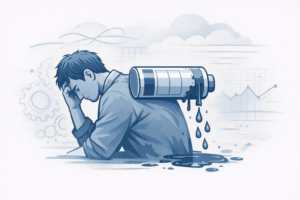
This is useful for surgeons. They mentally rehearse procedures before cutting. It’s catastrophic for people trying to finish a book proposal, launch a side project, or send a difficult email, because the brain has already partially logged the task as complete. The motivation to execute drops. Not because you’re weak—because you’ve been partially paid.
This is the Simulation Trap: planning is a counterfeit form of action that spends real motivational currency. You’re not procrastinating. You’re accidentally spending the energy meant for doing on a very convincing rehearsal of doing.
The “just start” advice fails because it treats this as a willpower problem. It isn’t. You can’t override a reward system with a pep talk.
Why the Plan Keeps Growing
There’s a second mechanism running underneath. Psychologists call it uncertainty aversion—humans experience ambiguity as a low-grade threat, and the brain treats planning as threat-reduction. Every variable you specify, every contingency you map, reduces the feeling of risk. So the plan grows not because you need more detail, but because detailing feels like making it safer.
Gary Klein, who studies decision-making under pressure, found that expert performers—ER doctors, firefighters, chess masters—don’t make better plans than novices. They make faster commitments to imperfect action and update as they go. The plan isn’t the thing that reduces risk. Contact with reality is.
Your elaborate plan is a bunker. It feels like preparation. It’s actually insulation from the feedback that would actually help you.
The First Ugly Action
The antidote isn’t “just start.” It’s more specific than that: identify the first action that feels embarrassing to take, and take it immediately—before you’ve made it presentable.
Embarrassment is the tell. It means the action is real enough that your reputation is on the line. It means you’ve crossed from simulation into territory where something could actually go wrong. That friction is the signal, not the obstacle.
A writer spent four months outlining a newsletter before sending a single issue. When she finally asked herself what’s the most embarrassing version of this I could send today, the answer was: a 300-word email to 12 friends with “Issue 1” in the subject line, no design, half-formed ideas. She sent it that afternoon. Three people replied with ideas that changed the newsletter’s entire direction. The four months of outline contained none of those ideas, because the outline was a simulation. The ugly email was contact with reality.
The rule: if you can’t identify an action uncomfortable enough to feel slightly underprepared, you haven’t found the action yet. You’re still in the bunker.
Plans Have a Half-Life
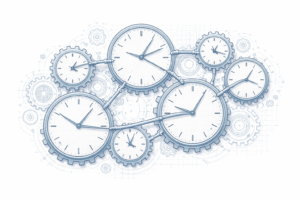
Here’s what the productivity literature almost never says: plans decay. Not metaphorically—literally. The context, energy, and assumptions embedded in a plan begin degrading the moment you finish writing it. The project you planned on Tuesday contains a version of you with Tuesday’s priorities, Tuesday’s understanding of the problem, and Tuesday’s blind spots.
Treat plans like perishables. Give each one a hard expiry: if you haven’t executed within 48 hours, don’t just reschedule—rebuild from scratch. Not because you need a new plan, but because the act of rebuilding forces you to confront what’s actually blocking you. Most people, when they rebuild the same plan three times, eventually realize: the plan isn’t the problem. There’s one specific action they keep not taking, and the plan is a structure built around avoiding it.
When a product manager kept rebuilding his feature spec every week for a month, he finally noticed: the spec was complete by Wednesday every time, but he never scheduled the stakeholder meeting. The plan was finished. The meeting was the Ugly Action he was insulating against. Once he saw that, he stopped rebuilding specs and booked the meeting first.
You Don’t Have a Procrastination Problem
The conventional frame is: you know what to do, you just won’t do it. That framing makes the solution feel like willpower, which makes failure feel like character.
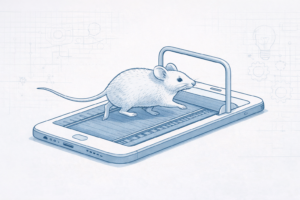
The more accurate frame: you have a counterfeit progress problem. You are genuinely working. The work you’re doing just doesn’t produce outputs—it produces the feeling of outputs, which is close enough to satisfy your brain’s accounting system but doesn’t move anything in the world.
This reframe matters because it changes where you intervene. Willpower operates at the level of “I must force myself to do the hard thing.” Counterfeit detection operates at a different level: is what I’m doing right now something that could theoretically fail? If the answer is no—if it’s still in your head, your doc, your color-coded system—it hasn’t started yet.
William James said the greatest discovery of his generation was that human beings can alter their lives by altering their attitude. That’s true and mostly useless. The more operational version: you can alter your output by altering what you’re willing to count as output.
Start Here, This Week
Pick one project you’ve been planning. Find the first action that feels underprepared. Do it today—not a version of it, not a draft of it, the actual thing, imperfectly. Then give your plan 48 hours to live. If you haven’t acted, throw it out and rebuild.
Once you see the Simulation Trap clearly, you start seeing it everywhere: in meetings that produce action items no one does, in strategies that get revised instead of executed, in feedback conversations that get workshopped until they lose their edge. The bottleneck is almost never information. It’s almost always the willingness to make something real before it’s ready to be seen.
Planning feels like building. Most of the time, it’s just very convincing standing still.