You’re three days into analyzing whether to take the new job offer. You’ve made a pros-and-cons list, researched the company culture, projected your finances five years out, and considered how the commute will affect your relationship. Then your friend says it: “You’re overthinking this. Just go with your gut.”
You feel a flash of shame. Maybe you are overthinking. Maybe you should be more spontaneous, more decisive, less in your head. So you make a choice quickly, just to prove you can.
Six months later, you’re dealing with consequences you would have seen coming if you’d kept thinking. The problem wasn’t that you thought too much. The problem was that you stopped.
The Tyranny of “Don’t Overthink It”
We’ve created a culture that treats thinking as inherently suspicious. Productivity gurus tell you to “decide and move on.” Self-help books warn against “analysis paralysis.” Business advisors preach “bias toward action.” The underlying message is clear: thinking too much is a character flaw.
This advice works brilliantly for ordering lunch. It fails catastrophically for everything else.
The anti-overthinking movement conflates two completely different cognitive processes. Daniel Kahneman’s research on System 1 and System 2 thinking shows why this matters. System 1 is fast, intuitive, automatic—perfect for recognizing patterns and making routine decisions. System 2 is slow, deliberate, effortful—essential for complex problems and novel situations.
Telling someone not to overthink a career change is like telling an architect not to overthink a bridge design. Some things demand sustained, rigorous thought. The question isn’t whether you should think deeply. It’s whether you’re thinking productively.
Rumination vs. Analysis: How to Tell the Difference
Here’s what actually happens when you “overthink”: you’re either ruminating or analyzing, and they look identical from the outside.
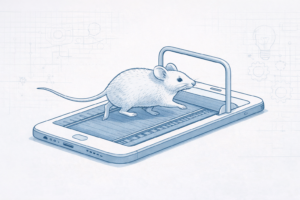
Rumination is circular. You replay the same thoughts without new information, driven by anxiety rather than curiosity. Psychologist Susan Nolen-Hoeksema’s research shows that ruminators review the same emotional territory repeatedly, like a tire stuck in mud, spinning but not moving forward. You think about the argument with your partner, but you don’t think through it—you just feel bad in slightly different ways.
Analysis is exploratory. You examine a problem from multiple angles, incorporate new information, test hypotheses, and generate insights. You’re not rehashing—you’re understanding. When you analyze that argument, you notice patterns in how conflicts escalate, consider what needs aren’t being met, explore different communication approaches.
The distinction matters because rumination correlates with depression and anxiety, while structured analytical thinking correlates with better decision-making and problem-solving. They’re not variations of the same thing. They’re fundamentally different processes that happen to both involve sustained thought.
When Complex Problems Demand Complex Thinking
Hannah Arendt wrote that “thinking is out of order” in modern life because we’ve lost the ability to distinguish between activities that require contemplation and those that require action. We’ve flattened everything into a binary: quick decision good, slow thinking bad.
But reality is more complex than your inbox. Some problems are genuinely multidimensional, with cascading consequences and no clear right answer. Career transitions. Relationship dynamics. Financial strategy. Parenting philosophy. These aren’t puzzles with solutions—they’re complex systems with tradeoffs.
System thinking researcher Donella Meadows distinguished between simple, complicated, and complex problems. Simple problems have obvious solutions. Complicated problems require expertise but follow predictable rules. Complex problems have interdependent variables that interact in non-linear ways—changing one element shifts everything else.
You can’t “just decide” your way through a complex problem any more than you can “just decide” how to prevent climate change. The problem isn’t that you’re overthinking. The problem is that everyone else is underthinking.
Five Ways to Think More Effectively (Not Less)
1. Run the rumination test
Before you judge yourself for overthinking, ask: Am I generating new insights, or rehearsing the same anxiety? New insights feel like movement—”oh, I hadn’t considered that angle” or “wait, this connects to that other pattern.” Rumination feels like quicksand—same thoughts, same feelings, no new information.
If you’re ruminating, the solution isn’t to stop thinking—it’s to change how you’re thinking. Switch from “why did this happen to me” to “what specifically happened, and what can I learn from it.” Move from emotion-focused brooding to problem-focused analysis.
2. Time-box your deep thinking
Give yourself explicit permission to think deeply, but within boundaries. Say “I’m going to spend 90 minutes really thinking through this decision” rather than letting it seep into every spare moment for weeks.
Behavioral economist Dan Ariely’s research on decision-making shows that constraints actually improve thinking quality. Unlimited time doesn’t lead to better decisions—it leads to decision fatigue and diminishing returns. But some dedicated time produces insights that quick judgments miss.
Pen and paper help. Something about externalizing thoughts onto a page creates distance and clarity that internal rumination can’t achieve.
3. Match thinking depth to decision complexity
Not all decisions deserve the same cognitive investment. Barry Schwartz’s work on the paradox of choice reveals that we often apply complex decision-making frameworks to decisions with minimal long-term impact, while making major life choices impulsively.
Create decision categories. Reversible decisions with low stakes? Go with gut feel or a simple heuristic. Irreversible decisions with high stakes and complex tradeoffs? Those deserve sustained analytical thought.
Changing jobs, ending relationships, relocating, having children—these are complex, irreversible, and consequential. They should occupy significant mental space.
4. Use structured frameworks for complex analysis
Random overthinking is exhausting and often unproductive. Structured thinking is powerful. The difference is methodology.
Try second-order thinking: What happens after what happens? If I take this job, I’ll earn more money—but what then? I’ll be able to save more, but I’ll have less time with my kids. That might affect our relationship, which might change my priorities in five years, which might make this job choice look very different.
Or use inversion, borrowed from Charlie Munger: Instead of asking “how do I make this work,” ask “how could this fail catastrophically?” That’s not pessimism—it’s the kind of thinking that prevents predictable disasters.
5. Recognize when “just decide” is actually harmful advice
Sometimes the advice to stop overthinking comes from people who haven’t fully grasped the complexity you’re dealing with. They mean well, but they’re applying simple-problem logic to complex-problem situations.
You’re allowed to say “I appreciate your perspective, but this decision has implications you might not be seeing.” You don’t owe anyone a snap judgment on matters that affect your life trajectory.
The novelist George Eliot wrote that “consequences are unpitying.” Quick decisions feel decisive, but they don’t exempt you from consequences. Sometimes slow, careful thought is the most respectful approach to the weight of a choice.
Reframing: The Problem Might Not Be You
What if the issue isn’t that you overthink, but that you’re surrounded by people who underthink? What if you’re actually well-calibrated to the complexity of modern life, while everyone else is running on outdated heuristics?
The pressure to decide quickly often comes from a culture that values action over understanding, motion over progress. We’ve confused decisiveness with wisdom. But decisiveness just means you chose fast—it says nothing about whether you chose well.
Your tendency toward deep analysis might be precisely what’s needed for navigating uncertainty. The goal isn’t to think less. It’s to think more effectively, to distinguish between productive analysis and unproductive rumination, and to protect your capacity for sustained thought in a world that’s trying to fragment your attention into meaningless shards.
Try This Week
Pick one complex decision or problem you’ve been avoiding because you “don’t want to overthink it.” Give yourself 90 minutes of protected time—no phone, no interruptions—to actually think it through. Write down what you’re considering, what tradeoffs exist, what you’re afraid of, what you’re hoping for.
See what emerges when you stop apologizing for thinking and start doing it deliberately.