You slept eight hours. You had your coffee. You’re sitting at your desk at 9 AM and already feel like you’re running on fumes. So you do what everyone does: assume you need more sleep, better nutrition, a morning routine overhaul. You download another sleep tracker. You read about magnesium.
None of it works. Because the problem isn’t supply—it’s drainage.
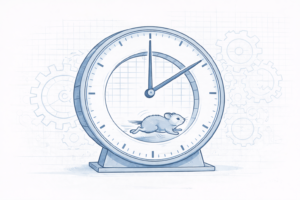
The conventional model of energy treats your body like a battery: charge it overnight, use it during the day. But that model misses something crucial. Your brain doesn’t clock out while your body recharges. It’s running background processes all night and all morning—churning through every unresolved situation you haven’t dealt with. Every “I need to respond to that email.” Every conversation you’ve been avoiding. Every decision you’ve deferred. By the time you sit down to do actual work, your brain has already been running for hours on things you haven’t consciously thought about yet.
You’re Not Depleted. You’re Leaking.
In 1927, psychologist Bluma Zeigarnik discovered something that reframes this entirely: the brain devotes significantly more cognitive resources to unfinished tasks than to completed ones. It’s not filing them away—it’s actively holding them open, refreshing them, making sure you don’t forget. Every open loop in your life isn’t stored passively. It’s attended to continuously.
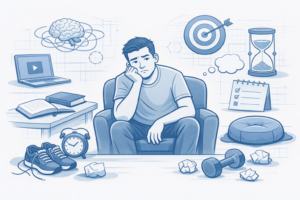
Think about what’s running in the background right now. The project you started but stalled. The conversation that ended awkwardly and hasn’t been addressed. The dentist appointment you’ve been meaning to schedule for three months. Each of these isn’t sitting quietly in a folder. It’s pinging your working memory on a loop, drawing processing power, making it harder to focus on whatever’s actually in front of you.
This is what David Allen called “psychic RAM” in Getting Things Done—the mental overhead of maintaining unfinished business. Allen’s real insight wasn’t that you need a better to-do list. It was that your brain is a terrible storage system for open commitments, and the act of holding them there costs more than you realize.
The Open Tab Tax
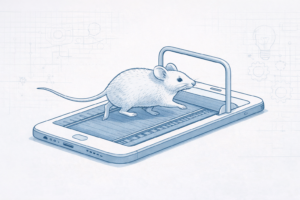
Here’s a mental model that makes this visceral: your brain is a browser, and every unresolved loop is an open tab. A tab for that unanswered email. A tab for the argument you had last Tuesday. A tab for the project you promised yourself you’d start in January. A tab for the message you read and forgot to reply to.
Most people are running 40 tabs. They wonder why the browser is slow.
The energy industry—sleep supplements, adaptogens, productivity apps—keeps selling you more RAM. More processing power to handle the load. But the fix isn’t more RAM. It’s closing tabs.
A tab closes when a decision gets made. Not when you think about it again—when you decide something about it: you’re doing it, you’re not doing it, you’re delegating it, you’re doing it on a specific date. The moment a task becomes a commitment with a place to live, it stops running in background memory.
The Pre-Decision
The highest-leverage thing you can do for daily energy isn’t a morning routine—it’s a pre-decision ritual the night before.
Not a to-do list. Pre-decisions are different. A to-do list is a menu of options; a pre-decision closes the tab tonight so your brain doesn’t process it overnight.
Spend 10 minutes before you stop work each day making three decisions. Not three tasks—three decisions. What’s the first thing you’ll do tomorrow, and when exactly? Which two things are you explicitly not doing this week? What conversation have you been deferring, and when will you have it?
The difference between “I need to deal with the client proposal” (open tab, running all night) and “I’m writing the client proposal Thursday at 10 AM for 90 minutes” (closed, filed, gone) isn’t organizational—it’s neurological. The second version gives your brain permission to stop processing it. You’ll notice the difference by 8 AM the next morning.
One warning: this feels purely administrative when you start. A manager who tried it told me it didn’t make her faster—it changed what she was fast at. She stopped being quick at reacting and started being quick at thinking. The tradeoff surprised her. She’d expected to gain time. She gained clarity instead.
Capture Everything, Decide Once
The second intervention is uglier and more important: a single place where every open loop lives.
Not a system. Not an app. One trusted location where anything you’re holding mentally gets parked—immediately, completely—so your brain can let it go.
Most people have four or five partial systems: a notes app, a mental list, starred emails, a sticky note, a text they sent themselves at 11 PM. None of them are fully trusted, so the brain keeps all of them as backup. You end up maintaining the loop and maintaining the system. Double overhead.
The specific form doesn’t matter—a notebook, Notion, a voice memo you process each evening. What matters is that it catches everything, and that you process it down to zero at least once a week. “Process” doesn’t mean complete. It means decide: do it, defer it, delegate it, or delete it. Deciding is what closes the tab.
What You’re Actually Managing
Here’s the reframe most energy advice misses: fatigue is not a symptom of doing too much. It’s a symptom of carrying too much undecided.
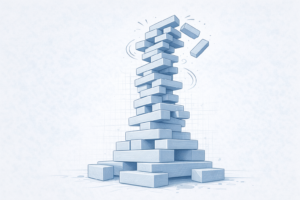
The person who works ten hours on one focused project often ends the day feeling more energized than the person who half-started eight things. The difference isn’t hours—it’s resolution. Completed loops don’t drain you. Incomplete ones compound.
This shifts the question entirely. Stop asking “how do I get more energy?” Start asking “what am I refusing to decide?”
This week, before you touch another supplement or readjust your sleep schedule, spend 20 minutes on one thing: write down every open loop in your life. Every deferred decision, every half-started project, every conversation you’ve been avoiding. Don’t solve them. Just surface them. See the tabs you have open.
Then close three.
Energy isn’t something you find. It’s something you stop wasting.