The problem with every “rebuild your ambition” article is the premise.
They treat ambition like a phone battery — depleted, needs recharging, just plug in the right morning routine and you’re back. But that’s not what happened to you. You didn’t run out of ambition. You got smart about it.
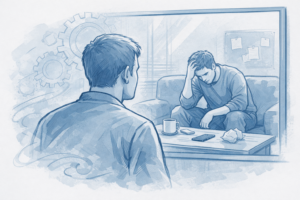
After a failure that really stung — the promotion that didn’t come, the project that collapsed, the business that quietly died — your brain did something rational: it stopped wanting things openly. Not because you’re broken. Because wanting things is exactly what made you vulnerable. So it learned to protect you by shrinking the target. That’s not burnout. That’s your brain working exactly as designed. And that’s why trying to reignite your “passion” with a vision board doesn’t work — you’re trying to override a protection system, not charge a battery.
What Ambition Does When It Gets Hurt
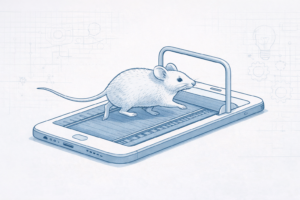
Martin Seligman’s learned helplessness research showed something uncomfortable: after enough uncontrollable failure, animals stop trying — even when escape becomes possible. The environment changed. The behavior didn’t. The brain had encoded wanting as the thing that caused pain, not the outcome itself.
You’ve felt this. You start something with genuine energy. It doesn’t land the way you expected. And the next time an opportunity shows up, there’s a half-second hesitation that wasn’t there before. A mental footnote: last time you felt this, it cost you something.
That hesitation isn’t laziness. It’s intelligence. And it compounds. Each time you protect yourself from disappointment, you get better at not wanting. Eventually the protection runs automatically — below awareness — and you experience it as “I just don’t feel ambitious anymore.”
The ambition didn’t leave. It disguised itself.
The Scar Tissue Problem
When tissue gets injured, it heals with collagen — tighter, less flexible, more protective than what was there before. Useful. But it restricts movement in ways the original tissue didn’t.
Ambition heals the same way. When it gets hurt, it heals with scar tissue behaviors: perfectionism, cynicism, strategic busyness, ironic detachment. These aren’t character flaws. They’re protection mechanisms doing their job too well.
The perfectionist isn’t lacking ambition — they’re protecting unfinished ambition from being judged. The person who’s “just being realistic” about a new idea isn’t without drive — they’re preemptively controlling the narrative so failure can’t touch them. The person who stays perpetually almost ready to start something big is keeping ambition alive in the safest possible form: hypothetically.
Scar tissue isn’t dead. It’s defending itself.
This reframe changes the entire diagnostic. You’re not asking how do I get motivated again? You’re asking what is my ambition currently hiding behind?
Finding What You’re Protecting
Before any strategy works, you need to name your specific scar tissue behavior. Not generally — specifically.
Camila ran a design studio that nearly folded during a brutal year. She survived it, rebuilt it, and then spent the next two years describing herself as “figuring out what’s next” while doing excellent, safe client work. Her calendar was full. Her ambition wasn’t missing — it was encased. She’d research a new direction for weeks, build decks that never left her computer, then abandon the project after some minor friction that, a few years earlier, wouldn’t have registered.
She wasn’t stuck because she lacked vision. She’d efficiently learned to extinguish her own sparks before they could fail publicly.
The question that broke it open wasn’t what do you want? It was: what do you keep almost doing?
That “almost” is your ambition in hiding. It’s still generating enough energy to start something — not enough to risk it. Your job isn’t to manufacture new desire from scratch. Your job is to follow the almost.
Lower the Stakes Until Wanting Feels Safe Again
The standard advice — dream bigger, find your purpose, set a 10-year vision — is exactly backwards for someone who’s been burned. You’re reintroducing a food your immune system has learned to attack. You don’t start with a full portion.
David Carr, the late New York Times media columnist, wrote about returning to writing after years of addiction by covering local school board meetings. Zero glamour, zero stakes, zero performance pressure. Not because it was his dream. Because it let him rebuild the experience of caring about work without the cost of caring about outcomes.
The mechanism: low-stakes ambition retrains the neural pathway between wanting and safety. Each small success doesn’t just feel good — it adds data to a brain that’s been keeping score of how often wanting leads to hurt.
Practically: take the thing you’ve been almost doing. Strip it to the smallest possible public version. Ship it before you can protect yourself from it. Not a business plan — one post. Not a career pivot — one conversation. Not a creative project — one completed draft that exists outside your hard drive. The output doesn’t matter. The experience of surviving the wanting does.
What trips people up: they pick something small, then unconsciously expand the scope until the stakes feel appropriately high again. This isn’t ambition returning — it’s scar tissue reasserting control. When you notice the project quietly doubling in size before you’ve started, that’s the tell. Cut it back in half. Then ship it.
The Reframe That Actually Changes Things
Most people treat ambition like a character trait you either have or have lost — fixed, intrinsic, mysterious. That framing makes you passive. Nothing to do but wait for inspiration to return.
But ambition is a learned behavior with a feedback loop. It strengthens when desire connects to reward. It weakens when desire connects to pain. And it doesn’t rebuild through inspiration — it rebuilds through accumulated small evidence that wanting things is survivable again.
You’re not trying to become ambitious. You’re trying to update a belief system your brain formed after specific experiences. That’s not a mindset shift. It’s a data collection project.
This week: write down the three things you’ve been almost doing for the past six months. Pick the smallest one. Find the smallest version of it that can exist outside your head. Give yourself 72 hours.
Not because it will transform your career. Because your ambition is watching to see what you do with it.
The problem was never that you stopped caring. It’s that you cared so much, you became very good at hiding it — even from yourself.